
|
Nancy Duncan, Au.D.
Como os Aparelhos Auditivos Ajudaram Scott a Manter a Confiança no Trabalho
Para muitos profissionais, a perda auditiva começa silenciosamente, quase imperceptivelmente. Pode começar com algumas palavras faltando aqui e ali em uma reunião, mal-entendendo um comentário em uma chamada telefônica ou lutando para acompanhar uma conversa em um escritório movimentado. Com o tempo, esses pequenos lapsos podem se acumular, corroendo a confiança e tornando a comunicação profissional exaustiva.
Em um evento para estudantes aceitos no Emerson College, Scott viveu um momento que destacou como a perda auditiva poderia afetar sua carreira. Depois de responder à pergunta de um estudante com uma resposta detalhada, ele percebeu que a havia interpretado mal. O chefe de sua área se inclinou e sussurrou: “Essa não foi a pergunta!”
Refletindo sobre o momento, Scott diz: “Foi muito constrangedor, e eu sabia naquele instante que minha audição estava afetando meu trabalho. Eu não podia ignorar isso por mais tempo.”
Esse incidente foi um alerta sobre a necessidade de proteger sua carreira, confiança e vida diária. Scott percebeu que era hora de buscar apoio profissional.
A virada de Scott: o momento em que tudo mudou
Aquele evento se tornou um momento decisivo. Até então, Scott estava lidando com pequenos mal-entendidos sem muita preocupação. Mas essa comunicação mal-entendida em público deixou claro que sua perda auditiva estava começando a impactar sua capacidade de se comunicar efetivamente.
“Eu sempre lidava com pequenos mal-entendidos, mas isso foi diferente. Fiquei chocado ao perceber que meu desempenho no trabalho e minha confiança estavam em jogo”, explica.
Lapsos na audição podem tornar a vida profissional mais exaustiva, especialmente ao tentar acompanhar conversas em reuniões ou apresentações. Para Scott, essa experiência enfatizou a importância de abordar a perda auditiva para permanecer engajado, confiável e confiante.
As preocupações que muitos profissionais têm, e por que muitas vezes são infundadas
Mesmo depois de decidir buscar ajuda, Scott tinha preocupações. Ele se preocupava que os aparelhos auditivos pudessem mudar a forma como os outros o percebiam e como ele parecia em um ambiente profissional. “Eu não queria parecer velho, especialmente trabalhando com jovens”, admite.
Essas preocupações são comuns, mas muitas vezes desnecessárias. Os aparelhos auditivos modernos são discretos, confortáveis e projetados para se integrar perfeitamente a vidas profissionais ativas.
“Fiquei surpreso com o quão imperceptíveis e confortáveis os aparelhos auditivos modernos são. Minhas preocupações sobre a aparência estavam completamente infundadas”, diz ele.
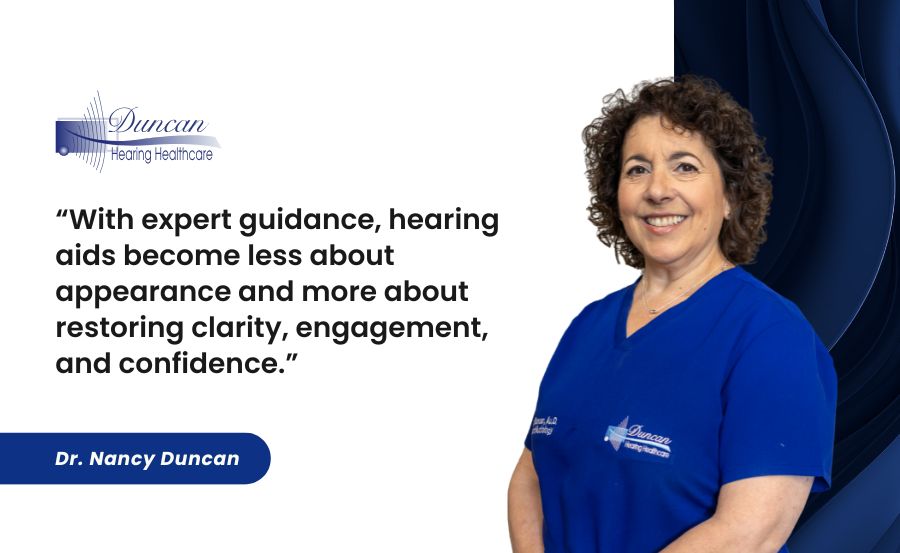
Com orientação especializada, os aparelhos auditivos deixam de ser sobre a aparência e se tornam mais sobre restaurar clareza, engajamento e confiança.
A primeira impressão da Duncan Hearing Healthcare: especialistas atenciosos focados em soluções
Desde a primeira consulta, Scott se sentiu reassurado. A equipe ouviu atentamente, explicou cada etapa claramente e focou em criar uma solução que atendesse suas necessidades profissionais.
“A equipe foi incrivelmente atenciosa e profissional. Eles ouviram, explicaram tudo claramente e se concentraram em resolver meu problema, não apenas em vender um produto”, recorda ele.
O ambiente privado e de apoio lhe deu confiança para seguir em frente. Ele sabia que o objetivo não era apenas adaptar um dispositivo, mas restaurar sua capacidade de participar plenamente das interações profissionais e sociais.
“Foi revigorante trabalhar com especialistas que entendiam minha vida profissional e meus objetivos. Eu me senti respeitado e apoiado durante todo o processo”, acrescenta.
A diferença que o cuidado auditivo certo faz
Uma vez que Scott recebeu seus aparelhos auditivos, a diferença foi imediata. Embora eles não tenham restaurado sua audição exatamente aos níveis anteriores à perda, transformaram sua capacidade de funcionar em situações de trabalho e sociais.
“Eu não conseguia funcionar na minha vida diária sem eles. Eles mudaram significativamente minha qualidade de vida”, diz ele.
Agora ele conseguia seguir reuniões, interagir confiantemente com os estudantes e participar de conversas sem esforço mental. Os benefícios vão além da audição: os profissionais experimentam menos fadiga, maior precisão e renovada confiança.
Aparelhos auditivos modernos são discretos e projetados para a vida profissional
A preocupação inicial de Scott com a aparência rapidamente se provou desnecessária. Os aparelhos auditivos modernos são pequenos, elegantes e quase invisíveis.
“Eu estava preocupado que eles me fizessem parecer mais velho, mas são minúsculos e quase impossíveis de notar. Eles se encaixam perfeitamente na minha vida profissional”, compartilha.
A tecnologia avançada permite que os usuários ouçam claramente em ambientes barulhentos, sigam conversas em reuniões e participem plenamente das atividades diárias. Esses dispositivos discretos permitem que os profissionais se concentrem na comunicação e no desempenho, em vez de no dispositivo em si.
O conselho de Scott para os outros: não espere, não se preocupe e não deixe a vaidade te segurar
Olhando para trás, Scott enfatiza a importância de agir cedo. Adiar o tratamento prolonga os desafios da perda auditiva e aumenta o estresse.
“Não espere se você tiver um problema! Não deixe que a vaidade impeça você de avançar com uma vida ativa que inclua audição funcional. Aproveite a ajuda profissional e a tecnologia moderna”, diz ele.
Buscar orientação profissional cedo garante que os aparelhos auditivos sejam corretamente ajustados, calibrados e integrados à vida diária. Essa abordagem restaura clareza, confiança e total engajamento em ambientes profissionais e pessoais.
“Minhas preocupações eram infundadas. Eu posso participar totalmente da minha vida profissional e pessoal novamente. Não deixe que preocupações o impeçam de buscar ajuda”, acrescenta.
Proteja sua carreira, confiança e futuro com a Duncan Hearing Healthcare
Para profissionais, a audição é central para a identidade, comunicação e sucesso na carreira. A perda auditiva não tratada pode impactar a confiança, precisão e bem-estar geral.
Scott resume sua experiência: “A Duncan Hearing Healthcare me ajudou a retomar o controle da minha audição. Eles me guiaram em cada etapa do caminho e me deram as ferramentas para continuar alerta e engajado na minha carreira.”
A Duncan Hearing Healthcare fornece orientação especializada, soluções personalizadas e tecnologia avançada para ajudar os profissionais a continuarem fazendo o que amam. Você não precisa aceitar limitações – pode assumir o controle da sua saúde auditiva, com a Duncan ao seu lado a cada passo do caminho.
Agende sua avaliação auditiva com a Duncan Hearing Healthcare hoje.
Perguntas Frequentes
1. Com que rapidez posso esperar notar uma diferença com os aparelhos auditivos?
Muitos usuários experimentam clareza e conforto melhorados nas primeiras semanas, embora a adaptação a ambientes auditivos complexos possa levar mais tempo. Consultas regulares com um profissional de audição ajudam a otimizar os resultados.
2. Os aparelhos auditivos modernos são notáveis em configurações profissionais ou sociais?
A maioria dos dispositivos modernos é pequena e discreta, projetada para se misturar perfeitamente à vida diária. Eles permitem uma comunicação clara sem chamar atenção, apoiando a confiança tanto em situações de trabalho quanto sociais.
3. Os aparelhos auditivos podem reduzir a fadiga auditiva e estresse no trabalho?
Sim. Ao esclarecer conversas e minimizar o esforço necessário para ouvir, os aparelhos auditivos podem diminuir a fadiga e melhorar o foco, ajudando os usuários a se sentirem mais engajados e confiantes ao longo do dia.
Fonte
1. https://www.nidcd.nih.gov/health/hearing-aids
Fornece orientação especializada sobre aparelhos auditivos, incluindo como eles melhoram a comunicação e reduzem a fadiga auditiva.
2. https://www.asha.org/public/hearing/hearing-aids/
Explora diferentes tipos de aparelhos auditivos, opções de ajuste e como eles suportam a comunicação diária e a vida profissional.
3. https://www.mayoclinic.org/diseases-conditions/hearing-loss/in-depth/hearing-aids/art-20044116
Oferece informações práticas sobre o que esperar de aparelhos auditivos, períodos de ajuste e benefícios para interações de trabalho e sociais.