|
Nancy Duncan, Au.D.
What Happens at a Comprehensive Hearing Assessment? | Hearing Health Awareness Month
The team at Duncan Hearing Healthcare is lucky enough to offer solutions to patients across the state of Massachusetts – at the Fall River, Centerville, and Dartmouth centers.
Every time someone comes to see us for the first time, it’s the start of an amazing personal journey to better hearing.
This always begins with one simple procedure: a comprehensive hearing assessment.
While you may have some recollection of this as an infant, most are not sure of what happens during their initial consultation.
To give you more insights during Hearing Health Awareness Month, this is what you can expect after you book a hearing assessment.
What are your experiences?
Before a doctor of audiology measures your hearing capacity, they’ll first want to find out about your medical history and experiences of hearing loss.
Hearing loss can be heredity, so this is a crucial phase in understanding whether your symptoms might be similar to those of a relative.
Your specialist will also ask how your hearing loss is affecting your day-to-day activities and relationships with others.
This will allow them to understand the essential background to your concern.
The visual inspection
Your doctor of audiology will then conduct a visual inspection of the inner and outer parts of your ear.
They’ll be looking to see if you have any wax build-up, for example, which could lead to a simple solution.
They’ll also analyze whether there is any redness or inflammation, which could point to an ear infection.
At no stage will you feel any pain or discomfort, and once they’ve conducted this step, they’ll move forward to understanding your overall hearing performance.
The hearing test
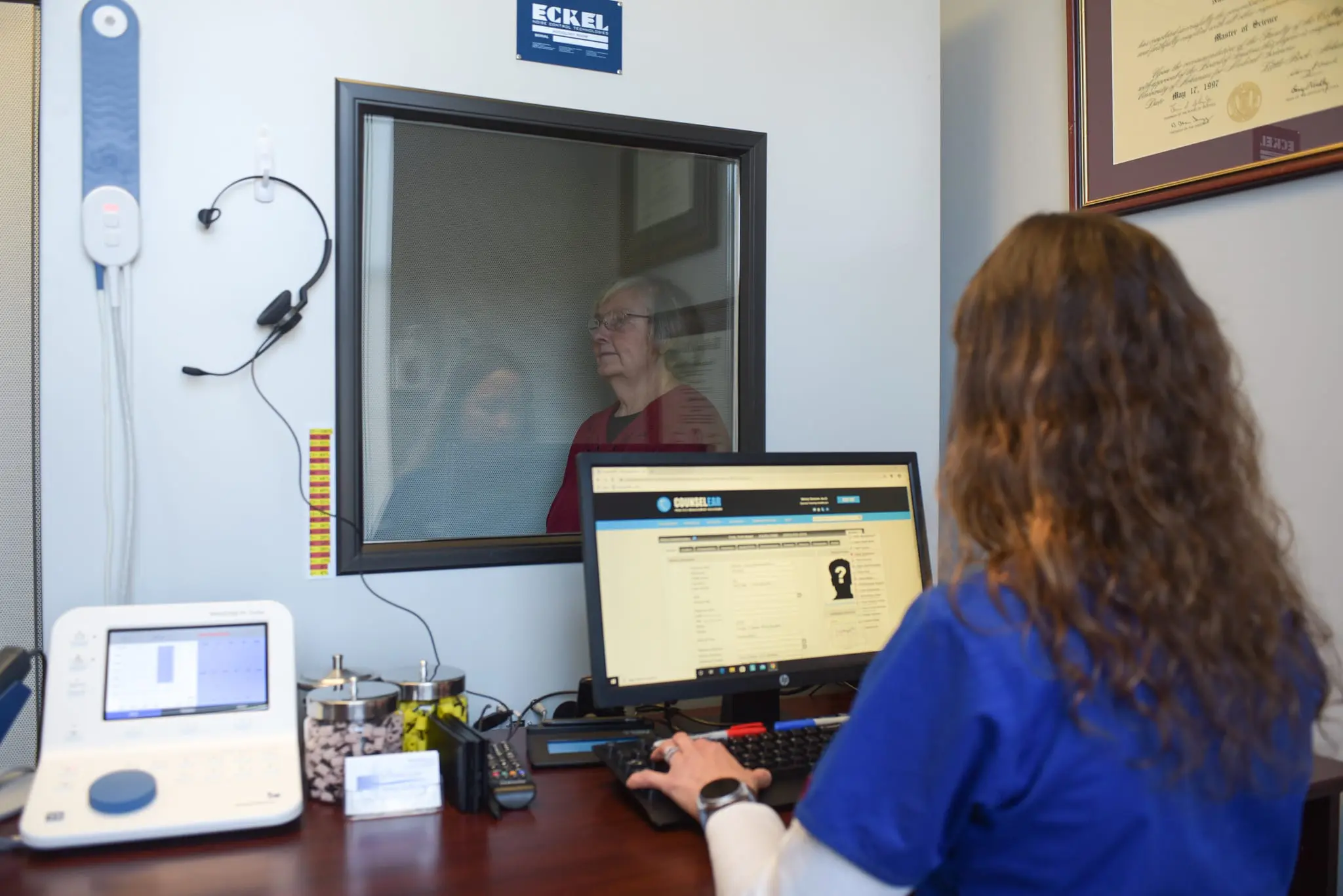
Your doctor of audiology will then walk you to the sound booth for your hearing test. Today, this can also take place in your car, via the curbside service.
Initially, you’ll put on a pair of headphones and listen to beeps at different volume levels. This will establish the lowest or softest level at which you can hear sounds.
Then, your doctor of audiology will examine how you understand different types of words. This will show how well your brain processes individual sounds.
Following this, they’ll examine how different background noises affect your hearing like you might find in a busy restaurant setting.
The results
As soon as these tests are completed, your doctor of audiology will then walk you back to their office and discuss the result with you in person.
In most cases, if you’re a candidate who would benefit from hearing aids, they can discuss options with you about what might fit your level of investment immediately.
Alternatively, if you require a referral to an ENT physician, doctors of audiology can give you advice about the next steps to take.
The whole process doesn’t last more than thirty minutes, and afterward, you’ll have complete peace of mind about your hearing health going forward.
Are you concerned about a hearing loss or know someone else who is? Contact the team at Duncan Audiology, and they’ll help you today!